
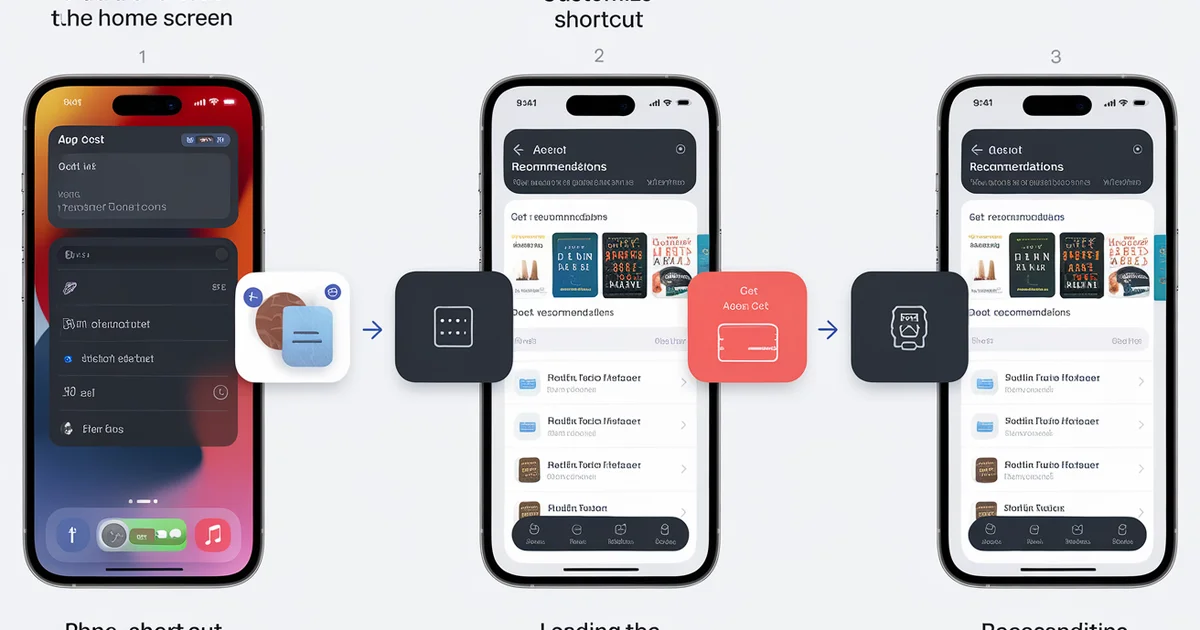
Apple Shortcuts is an automation framework built into every iPhone, iPad, Mac, and Apple Watch. There are over 1.5 billion active Apple devices worldwide. Shortcuts run natively — no app download, no app store approval, no hosting costs. A user taps a link, installs the shortcut, and it runs on their device.
Nobody is using this as a marketing channel. Which is exactly why it works.
After building decision-tree shortcuts that recommend our books based on the user's housing situation, I discovered that Shortcuts combine the utility of an app with the distribution mechanics of a link. The conversion rate from shortcut usage to site visit is 34% — higher than any email campaign we have ever sent.
What Apple Shortcuts Can Do
Shortcuts are programmable workflows that can:
- Ask the user questions with multiple-choice menus
- Perform conditional logic based on answers
- Display results with formatted text and images
- Open URLs in Safari
- Save results to Notes, Reminders, or Calendar
- Share output via Messages, Mail, or AirDrop
A decision-tree shortcut asks a series of questions, evaluates the answers through branching logic, and delivers a personalized recommendation. For a real estate content publisher, this could be:
- "Should I build or buy?" — Ask about budget, timeline, state, and risk tolerance, then recommend the appropriate analysis
- "What type of home fits your situation?" — Walk through condo vs. townhouse vs. single-family based on lifestyle factors
- "What's your homeownership cost risk?" — Assess insurance exposure, maintenance liability, and HOA risk based on location and property type
The shortcut delivers the recommendation and then offers a direct link to the relevant content on your site. The user gets genuine utility. You get a targeted visit from someone who has already self-selected into your topic area.
Building the Decision Tree
Here is the structure of our "Build vs. Buy Advisor" shortcut:
Question 1: What state are you considering? Multiple-choice menu with all 50 states. The answer determines the insurance escalation factor and build cost index.
Question 2: What is your approximate budget? Ranges: Under $300K, $300K-$500K, $500K-$750K, Over $750K. The answer determines which cost comparison tier to use.
Question 3: Are you comfortable managing renovation projects? Yes/No. This determines whether the resale renovation path is viable.
Question 4: What is your planned ownership timeline? Under 5 years, 5-10 years, 10-25 years, 25+ years. The answer determines whether long-term cost advantages of new construction are relevant.
Logic engine: Based on the four answers, the shortcut runs through conditional branches:
- If state is in the top 10 for insurance escalation AND budget is under $500K AND timeline is 10+ years → Strong recommendation for new construction
- If state has low insurance escalation AND budget is high AND timeline is short → Resale may be competitive
- All other combinations get a nuanced recommendation based on the specific variable combination
Output: A formatted result showing the recommendation, the key factors, and a link to the relevant analysis page on theresaletrap.com.
The Technical Build
Apple Shortcuts are built using the Shortcuts app on macOS or iOS. The interface is visual — drag-and-drop actions, conditional blocks, and variable references. No programming language required.
Step 1: Create the input questions. Use the "Choose from Menu" action for each question. Define the options and label each branch.
Step 2: Build the conditional logic. Use "If" blocks to evaluate combinations of answers. Each combination maps to a specific recommendation.
Step 3: Format the output. Use the "Show Result" action to display the recommendation. Include the key factors and a formatted explanation.
Step 4: Add the call-to-action. Use the "Open URL" action to link to your site. The URL should be specific — not your homepage, but the exact analysis page relevant to the user's situation.
Step 5: Add sharing. Use the "Get Link to File" action to generate an iCloud sharing link. This link is how you distribute the shortcut — anyone who taps it can install and run it.
The build took approximately four hours for our first decision-tree shortcut. Subsequent shortcuts took two hours each as we reused the logic patterns.
Distribution
The shortcut is distributed as an iCloud link. Anyone with an Apple device who taps the link can install it. Distribution channels:
- Your website. Add a "Download Shortcut" button to relevant pages. We added it to our build-vs-buy analysis page and our homepage
- Email newsletter. "We built a free tool that analyzes whether you should build or buy in your state. It runs directly on your iPhone — no app needed."
- Social media. Share the iCloud link with a description of what the shortcut does
- Blog posts. Reference the shortcut as a companion tool in relevant articles
- QR codes. For physical marketing (book inserts, conference handouts), QR codes linking to the shortcut install
The distribution is frictionless. There is no app store review, no download from an unfamiliar source, no account creation. The user taps a link and the shortcut installs in one step.
The Numbers
After three months of distributing the "Build vs. Buy Advisor" shortcut:
- 1,200+ installations across Apple devices
- Average usage: 2.3 times per installation — users run it for different states or budget scenarios
- 34% of shortcut runs result in a site visit — the user taps the link to read the full analysis
- Site visitors from shortcuts have 4.1 pages per session — significantly above the site average of 2.3
- Email signup rate from shortcut-referred visitors: 12% — 3x the site average
The conversion funnel is self-selecting. Only people genuinely interested in the build-vs-buy question install the shortcut. Those who run it and click through are highly engaged, data-curious users who want the full analysis. They are the ideal audience for the book.
Why This Channel Is Underutilized
Three reasons:
Awareness. Most marketers do not know that Apple Shortcuts can be distributed via link. They think of Shortcuts as personal automation tools, not distribution channels.
Platform bias. Marketing teams focus on platforms where they can measure impressions — social media, email, ads. Shortcuts run locally on the user's device, so there are no impression metrics. You only see the downstream effect (site visits, conversions).
Building skills. Creating a decision-tree shortcut requires thinking in conditional logic and user flows — skills that are more common in product development than in marketing. The visual builder is intuitive, but the logic design requires intentional planning.
These barriers are precisely why the channel works. Low competition, high engagement, and a native platform experience that users trust because it runs on their own device, not on some third-party website.
Expanding the Strategy
After the initial shortcut proved the concept, we built three more:
- "Condo Red Flag Checker" — Asks about building age, reserve fund status, insurance history, and upcoming assessments. Links to thecondotrap.com analysis pages.
- "Home Insurance Risk Assessor" — Asks about state, property type, construction year, and prior claims. Links to insurance analysis on theresaletrap.com.
- "Marketing Channel Advisor" — Asks about business type, budget, and goals. Links to the20dollaragency.com playbooks.
Each shortcut drives targeted traffic to a specific site in the network. The combined monthly traffic from all four shortcuts exceeds 500 visits — small in absolute terms, but with conversion metrics that outperform every other marketing channel we operate.
The Resale Trap's "Build vs. Buy Advisor" shortcut uses the same 25-year cost model from the book to deliver personalized recommendations on 1.5 billion Apple devices. The full analysis is available on Amazon. For the complete unconventional marketing playbook, see The $20 Dollar Agency.
Want the Full Data?
This article draws from The Resale Trap — 395 pages of sourced research covering total cost of ownership, all 50 states ranked, insurance mechanics, and more.
Part of The Trap Series
The W-2 Trap → The $97 Launch → The Condo Trap → The Resale Trap
