
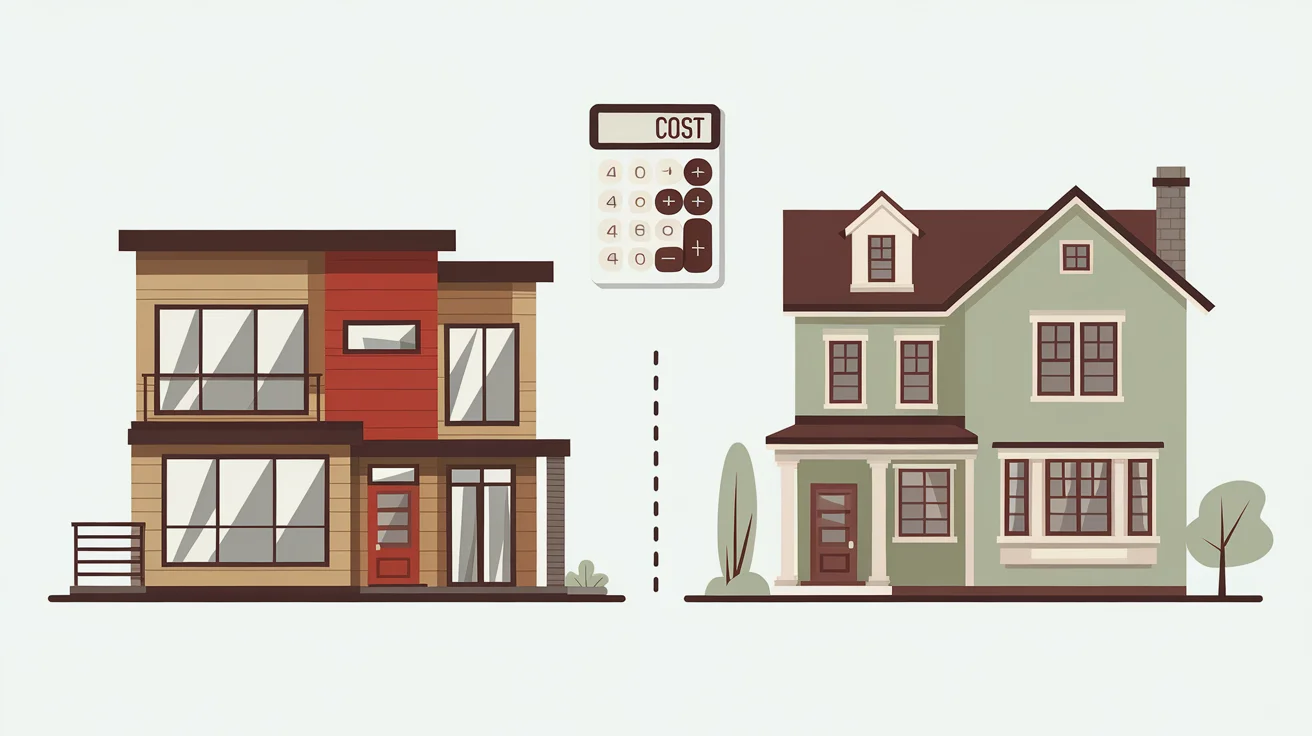
The real estate industry uses a single number for home maintenance costs: 1% of the home's value per year. It's repeated in every buyer's guide, every mortgage affordability calculator, and every agent's reassurance that "maintenance is manageable."
That 1% figure is an average. And like most averages, it obscures the reality. A five-year-old home costs roughly 0.5% of its value in annual maintenance. A twenty-five-year-old home costs 3% or more. The maintenance cost curve isn't flat — it's exponential. And if you're buying a resale home that's already partway up that curve, the 1% estimate can understate your actual costs by 200-300%.
Here's what the timeline actually looks like.
Years 1-5: The Honeymoon Period
If the home is relatively new (under 10 years old at purchase), the first five years of ownership are the cheapest you'll ever experience. Major systems — HVAC, roof, water heater, appliances — are still within their expected lifespans. Maintenance is cosmetic and minor: paint touch-ups, gutter cleaning, caulking, minor landscaping.
Expected annual cost: 0.5-1% of home value.
On a $400,000 home, that's $2,000-$4,000/year. Manageable. This is the period that makes homeownership feel affordable. It's also the period that creates false confidence about future costs.
If you're buying a resale home that's already 15-20 years old, you skip this period entirely. You're buying into the middle of the cost curve, and the honeymoon is someone else's memory.
Worth noting on resale specifically: a seller-provided home warranty is not a substitute for a honeymoon period. The standard plan carries an aggregate cap of roughly $5,000 across the contract year, with per-occurrence caps on HVAC of $1,500 to $3,000 on basic plans. Fair-market HVAC replacement in Colorado is $10,000 to $15,000 today. The warranty pays roughly a third of the bill if it pays at all, and the exclusion list (pre-existing conditions, improper maintenance, code upgrades, refrigerant phase-out, rust, mismatched components) is built around the exact equipment age the warranty is being offered to cover. Treat any seller-provided warranty on a 12+ year-old system as a closing concession, not as coverage. Your agent is a transaction coordinator first; the warranty closes the deal, not the claim.
Years 6-10: Systems Start Failing
This is where the cost curve begins its upward bend. Individual components reach end-of-life and start requiring replacement, not just repair.
What typically hits in this window:
- Water heater replacement: $1,200-$3,000 (tank) or $3,000-$5,500 (tankless). Average lifespan: 10-12 years.
- HVAC major service or replacement: $5,000-$12,000. Air conditioners last 15-20 years, furnaces 15-25 years. If the home had 5-year-old systems when you bought it, they're reaching inspection age now.
- Appliance replacements: $3,000-$8,000 for a full kitchen suite. Dishwashers last 9-12 years, refrigerators 10-18 years, ranges 13-15 years.
- Roof inspection and repairs: $500-$2,000 for inspection and minor repairs. If the roof was 10 years old at purchase, you're now looking at a roof that's 15-20 years into a 25-30 year lifespan.
- Exterior paint or siding repair: $3,000-$8,000 depending on home size and material.
Expected annual cost: 1.5-2% of home value.
On a $400,000 home: $6,000-$8,000/year. Double the honeymoon period. This is where underfunded maintenance reserves start showing strain, and where homeowners begin deferring repairs — which accelerates future costs.
Years 11-20: Major Replacements Hit
The cost curve steepens sharply. Multiple major systems reach end-of-life simultaneously, and the replacements are five-figure expenses.
What typically hits in this window:
- Roof replacement: $8,000-$25,000 depending on material and size. Asphalt shingles last 20-30 years. If the home was built 20 years before you bought it, the roof replacement falls squarely in your ownership period.
- Siding replacement: $8,000-$20,000. Vinyl lasts 20-40 years, wood 15-20 years before major intervention.
- Window replacement: $10,000-$30,000 for a full home. Windows last 15-30 years depending on quality and climate.
- Electrical panel upgrade: $2,000-$4,000. Panels installed before 2000 may not meet current code requirements.
- HVAC full replacement: $7,000-$15,000 for a complete system (furnace + AC + ductwork inspection).
- Plumbing repairs: $2,000-$10,000. Older homes with galvanized or polybutylene pipes face partial or full re-piping.
- Foundation monitoring or repair: $5,000-$50,000 if settlement issues appear.
Expected annual cost: 2-3% of home value.
On a $400,000 home: $8,000-$12,000/year. Triple the honeymoon period. In peak replacement years, a single roof-plus-HVAC combination can cost $30,000-$40,000 in a single year.
Years 21+: The Compounding Crisis
After 20 years of ownership — or on a home that was already 20+ years old when you bought it — maintenance costs compound. You're not just replacing original systems anymore. You're replacing the replacements that were installed during the Year 11-20 window, and you're dealing with cumulative wear on structural elements that don't fail suddenly but degrade steadily.
What compounds:
- Second-generation HVAC and water heater replacements
- Driveway and walkway deterioration ($3,000-$10,000)
- Deck or patio rebuild ($5,000-$20,000)
- Tree removal and major landscaping ($2,000-$15,000 per tree)
- Insulation replacement or upgrade ($2,000-$5,000)
- Second roof replacement cycle begins
- Accumulated code compliance costs as standards evolve
Expected annual cost: 3%+ of home value.
On a $400,000 home: $12,000+ per year. On a home that has appreciated to $500,000-$600,000 over those decades, maintenance costs scale with value — $15,000-$18,000 annually.
The 25-Year Total: $400K Resale vs. New Build
Consider two scenarios. Buyer A purchases a $400,000 new-build home at age 0. Buyer B purchases a $400,000 resale home already 20 years old.
Buyer A (new build) starts at the bottom of the cost curve. Over 25 years of ownership, estimated total maintenance: $150,000-$200,000.
Buyer B (20-year-old resale) starts partway up the curve and enters the compounding crisis within the first 5 years of ownership. Over 25 years, estimated total maintenance: $250,000-$350,000.
The difference — $100,000-$150,000 — is rarely reflected in the purchase price differential between new and resale. The Cost Calculator models this decade-by-decade trajectory for your specific home, purchase price, and building age.
What That Maintenance Premium Could Have Earned
The $100,000-$150,000 maintenance premium isn't just money spent. It's money that could have been invested. The Opportunity Cost Calculator shows what that differential would grow to if invested in a low-cost index fund instead.
At 7% average returns, $100,000 invested over 25 years grows to $542,000. That's the true cost of the resale maintenance premium — not $100,000, but over half a million in lost portfolio growth.
The FIRE Calculator translates that into time: how many additional years of work does the maintenance premium add to your career? For most households, the answer is 3-7 years.
Run Your Own Numbers
Every home is different. Climate, building materials, prior maintenance quality, and local labor costs all shift the curve. But the shape of the curve — gradual early, steep late, compounding always — is universal.
The calculators at /tools/ let you model your specific situation. Enter the home's age, purchase price, and condition, and see the decade-by-decade cost projection.
The Resale Trap covers the complete 25-year cost model with 50-state data, insurance escalation analysis, and the full build-vs-buy comparison. The maintenance timeline is one piece of a larger financial picture that most buyers never see until they're living it.
For digital tools including free SEO audits and site analysis, visit jwatte.com/tools/.
The 1% rule is a myth. The cost curve is the reality. Know which part of the curve you're buying into before you sign.
Want the Full Data?
This article draws from The Resale Trap — 395 pages of sourced research covering total cost of ownership, all 50 states ranked, insurance mechanics, and more.
Part of The Trap Series
The W-2 Trap → The $97 Launch → The Condo Trap → The Resale Trap
